|

Tariq Mooseajee
Thank you for taking the time to read this H1-2025 version of the UK&I M&A Monitor. This report consolidates research performed by Dealsuite, the leading UK&I and international platform for M&A transactions. It contains statistics and trends for the UK&I M&A mid-market (enterprises with a revenue between £1 million and £200 million) over the first half of 2025. Dealsuite contacted 433 M&A advisory firms operating within the UK&I M&A mid-market. The aim of this study is to create periodic insights that improve the UK&I market’s transparency and to serve as a benchmark for M&A professionals. We are convinced that sharing information within our network leads to an improved quality and volume of deals.
After years of turbulence, uncertainty has become less of an exception, and more of a constant. Since 2020, the M&A market has been confronted with a series of external influences: high inflation, rapidly rising interest rates, geopolitical tensions both inside and outside of Europe, and global trade wars putting pressure on economic dynamics. Where these factors previously led to hesitation among buyers and sellers, there now appears to be a structural adjustment. Many dealmakers have adapted to this new reality, where volatility is more often the rule than the exception. This adaptation marks the emergence of a ‘new normal’ that is visible across the M&A market, particularly in the SME segment, which has traditionally also been less susceptible to macroeconomic fluctuations.
Even now, the SME segment is showing a relatively stable picture, despite ongoing external uncertainties. This translates into a market that appears more resilient than before.
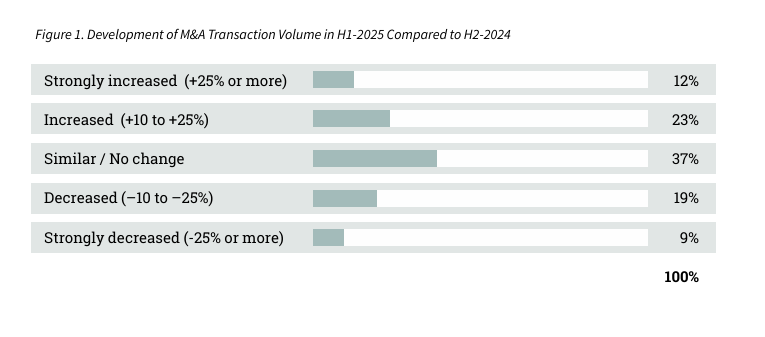
In the first half of 2025 the average deal size saw a decline compared to the second half of 2024, reversing the previous trend of growth. Half a year ago, there was a noticeable increase in the share of larger transactions, particularly those exceeding £10 million. However, in H1-2025, the share of deals above £10 million decreased by 9 percentage points. At the same time, there was a rise in smaller transactions, notably in the £2.5 to £5 million range, which increased by 6 percentage points, and in deals below £2.5 million, which grew by 5 percentage points. This shift reflects a movement toward smaller transactions in H1-2025 compared to the prior half-year.
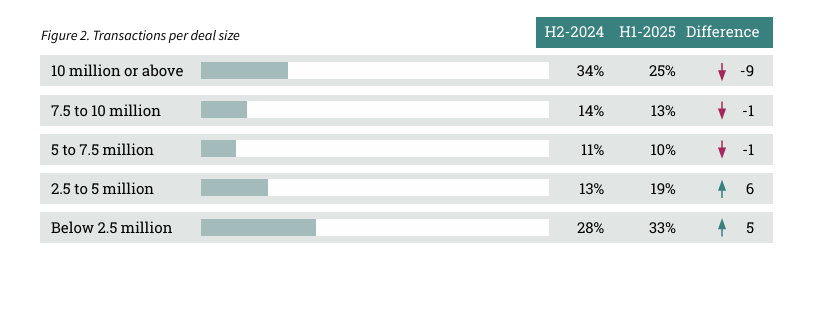
The number of expected transactions in a sector is influenced by a variety of market, industry, and f inancing-related factors. To gain insight into anticipated shifts, advisors were asked in which sector they expect the largest increase or decrease in the number of transactions in H2-2025. Each respondent could indicate one sector. The results are presented in two charts, showing the three sectors most frequently mentioned for an expected increase and decrease.
Business Services was most frequently cited as the sector expected to see the largest increase (47% of respondents), followed by Software Development (18%) and Healthcare & Pharmaceuticals (12%).
Hospitality & Tourism was most frequently cited as the sector expected to see the largest decrease (33% of respondents), followed by Retail Trade (26%) and Construction & Engineering (21%).
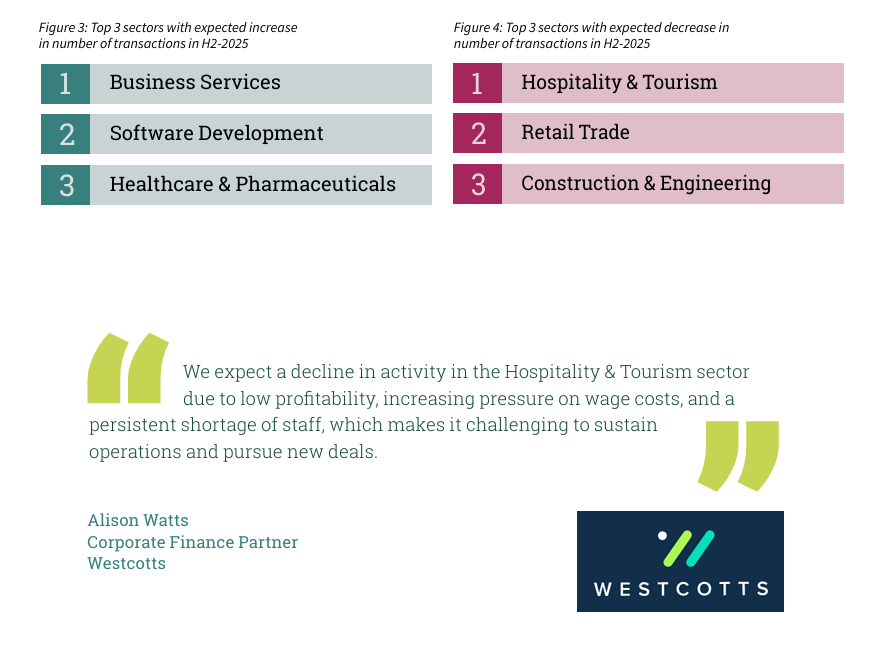
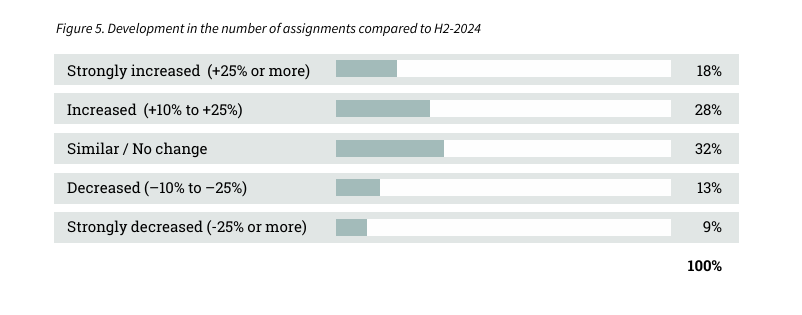
The results are explained in more detail in Figure 5 below. These are assignments received in H1-2025 and completed in H1-2025, however, it is worth noting that some of these projects may be completed during a later period or canceled. In H1-2025, 32% of advisors reported a similar number of transactions compared to H2-2024. While 22% of advisors noticed a drop, 46% reported an increase in the number of assignments.
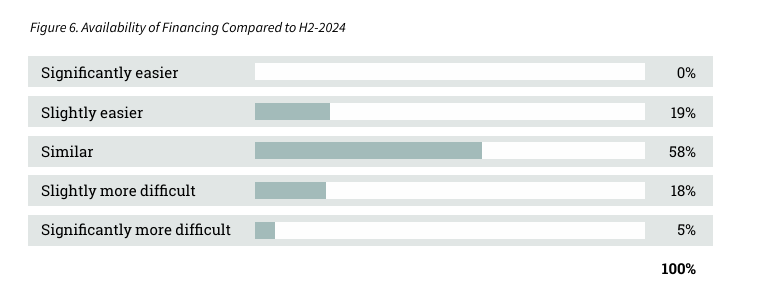
Advisors were asked to report on the availability of financing compared to H2-2024, the results are shown in Figures 6 and 7. According to the responses, access to financing in the UK&I has remained similar compared to the second half of 2024. 58% of respondents indicate that the situation remains unchanged in H1-2025. A total of 19% of respondents report that financing has become easier, whereas 23% indicate it has become more difficult.
Looking ahead to the second half of 2025, expectations regarding financing conditions are mixed. Nearly half of the respondents (48%) expect conditions to remain similar, while 14% anticipate a slight improvement. However, 29% foresee slightly more difficult conditions, and 9% expect financing to become significantly harder. No respondents predict a significant easing of financing conditions.

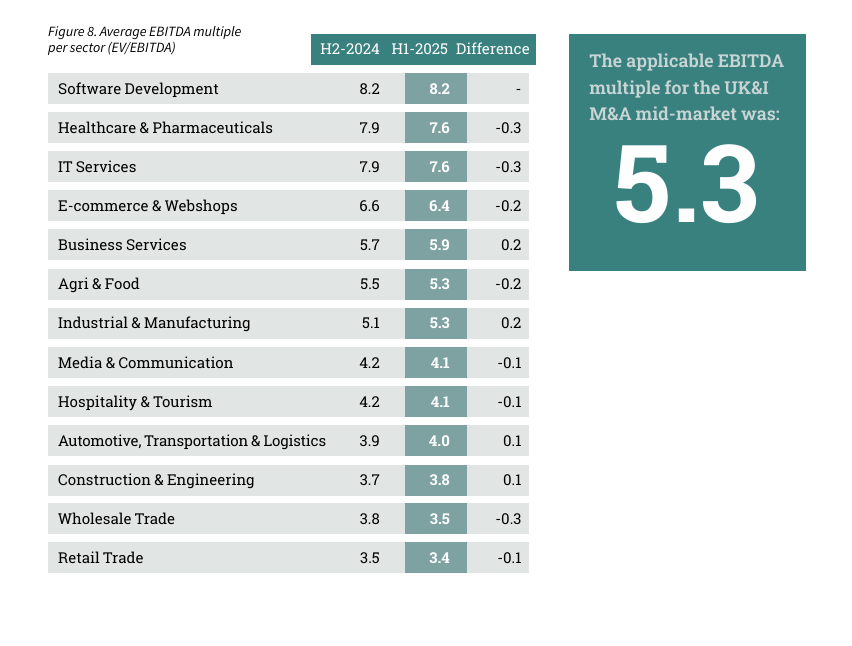
Since the first half of 2020, Dealsuite has been reporting the average multiples per sector every six months, the average EBITDA multiple paid for a company in a specific sector. In this study, participants were asked about the current multiples being paid, based on their (revised) insights. The results are shown in Figure 8. The reported multiples are based on the enterprise value (EV) of the acquired companies.
The average EBITDA multiple slightly decreased from 5.35 to 5.3 in H1-2025. Most sector multiples saw a slight decline. The Business Services and Industrial & Manufacturing sectors both saw an increase of 0.2.
Company valuations are inherently specific and depend on factors such as growth, profitability, market position, and risk. While a multiple alone is not a complete valuation method, it provides a useful benchmark, particularly for comparing similar transactions in the near term.
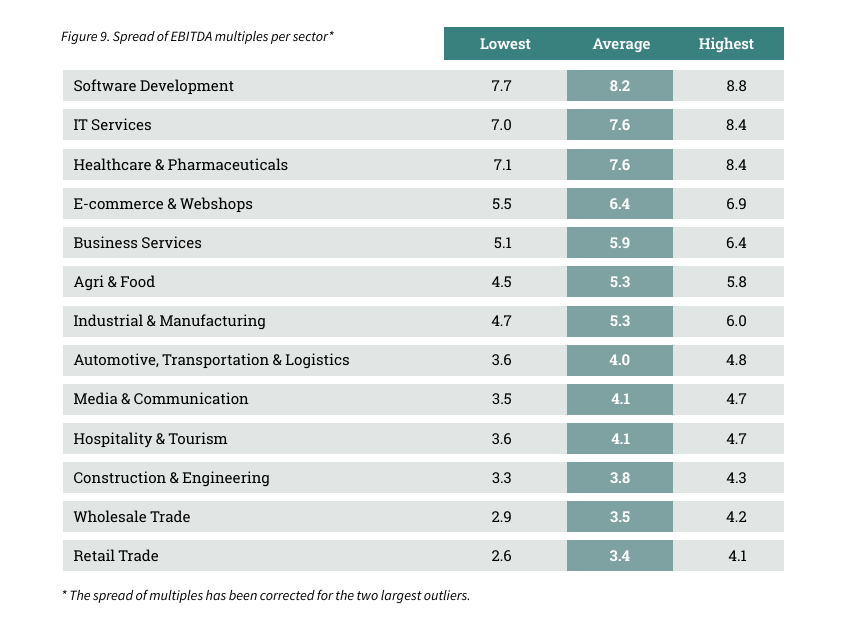
Figure 9 illustrates the distribution of EBITDA multiples by sector. Some sectors encompass a wide range of companies, which explains the broader spreads compared with sectors composed of more similar businesses. The table shows the typical range of EBITDA multiples per sector, though individual transactions can occur at significantly higher or lower levels.
To provide a representative view of a typical company within each sector, the range has been adjusted to exclude the two largest outliers per sector.
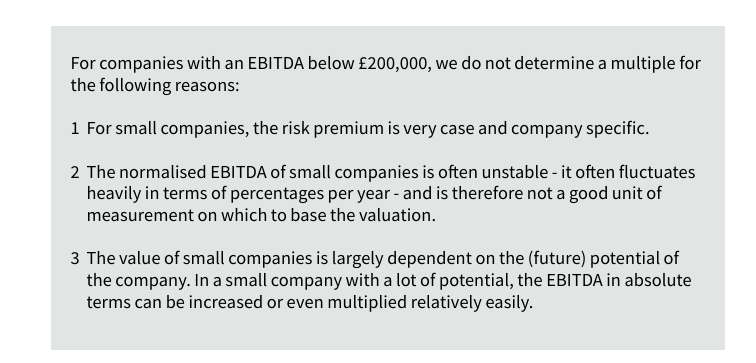
The size of a company plays a crucial role in determining multiples in business valuation. For small and medium-sized enterprises (SMEs) in the UK, it is essential to accurately quantify the impact of the Small Firm Premium. This is particularly relevant for businesses with an EBITDA ranging from £200,000 to £10,000,000.
Studies have shown that smaller companies face a higher likelihood of not achieving their expected cash f lows (Damodaran, 2011; Grabowski and Pratt, 2013). This can be attributed to factors such as reliance on specific customers or suppliers, or dependence on unique technical expertise that may be lost if key employees leave. Such vulnerabilities can significantly impact a company’s returns and, consequently, its valuation. The elevated risk premium associated with smaller businesses, known as the Small Firm Premium, leads to a reduction in value. As a result, EBITDA multiples for larger companies tend to be higher on average compared to those for smaller companies.
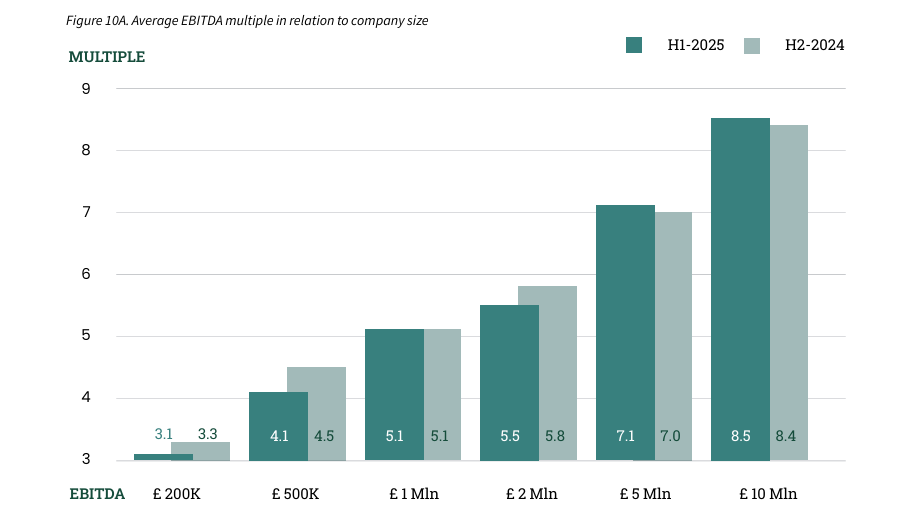
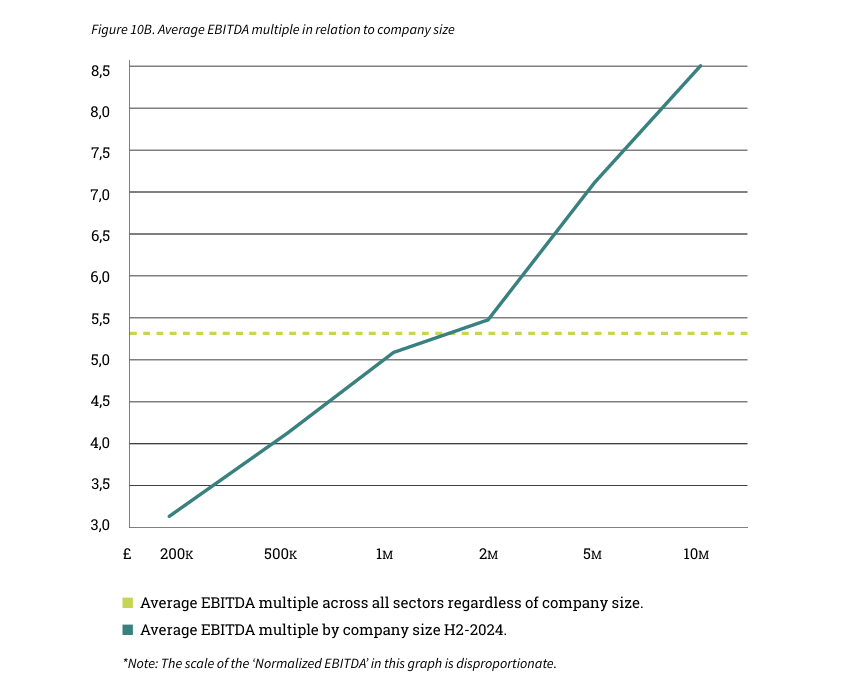
The results of this monitor survey confirm again that companies with a low EBITDA have a lower multiple than companies with a high EBITDA. The influence of company size on EBITDA multiples paid is presented in Figures 10A and 10B.
The difference in the EBITDA multiple between companies with a normalised EBITDA of £200,000 and £10,000,000 is 5.4 (3.1 compared to 8.5).
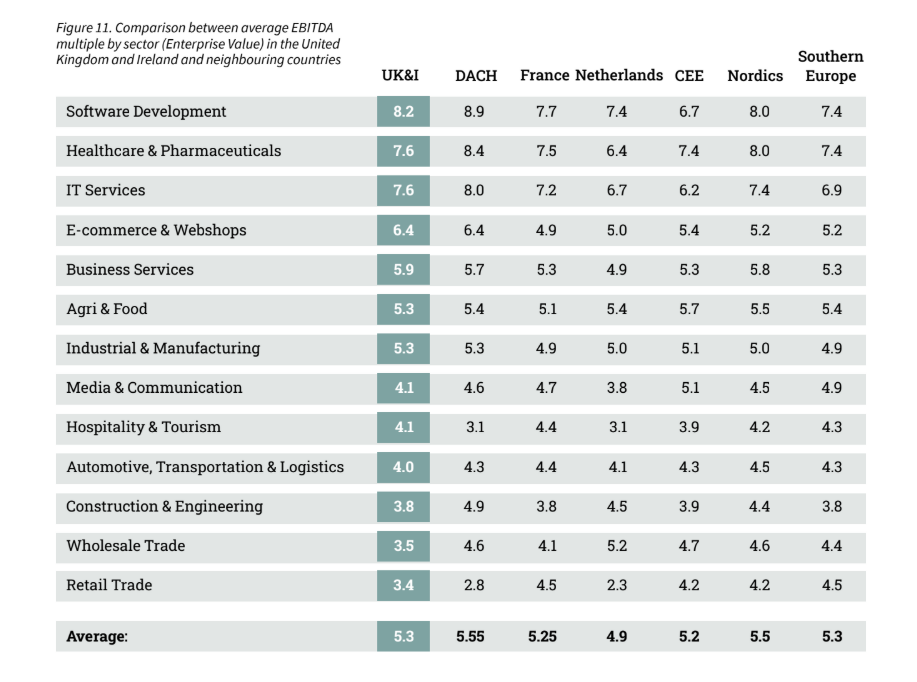
A comparison of EBITDA multiples between different countries highlights the advantages of cross-border deals. For example, it can be beneficial to buy a particular company abroad or to sell a company to an international buyer. Figure 11 shows the differences in EBITDA multiples between European markets.
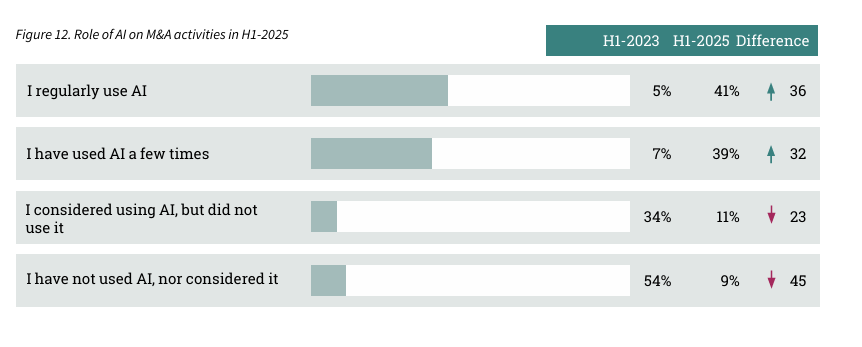
AI Has Become an Indispensable Tool in M&A Processes The use of AI in M&A processes has increased significantly over the past two years. In H1-2023, only 5% of respondents reported using AI regularly; by H1-2025, this share had risen to 41%. This suggests that AI has now taken on a more permanent role within the M&A landscape.
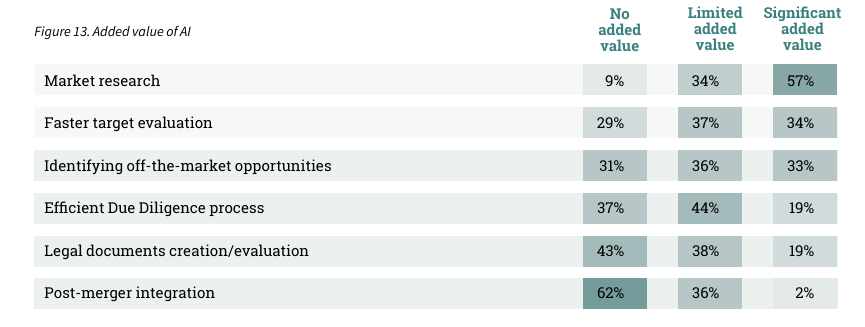
In 2023, M&A advisors were asked about the expected added value of AI in their work. Two years later, many of those expectations have been met. AI is now seen as particularly valuable for market research and for faster evaluation of targets.
For identifying off-market opportunities, the perception is more mixed: 33% see significant value, 36% limited, and 31% no added value—slightly below the 2023 expectations but still broadly recognized. AI provides only limited support in due diligence and legal documentation, with the majority of advisors reporting no or limited added value. Post-merger integration remains the area where AI is rarely considered valuable, with 62% reporting no added value, slightly less than anticipated, and only 2% seeing significant impact.
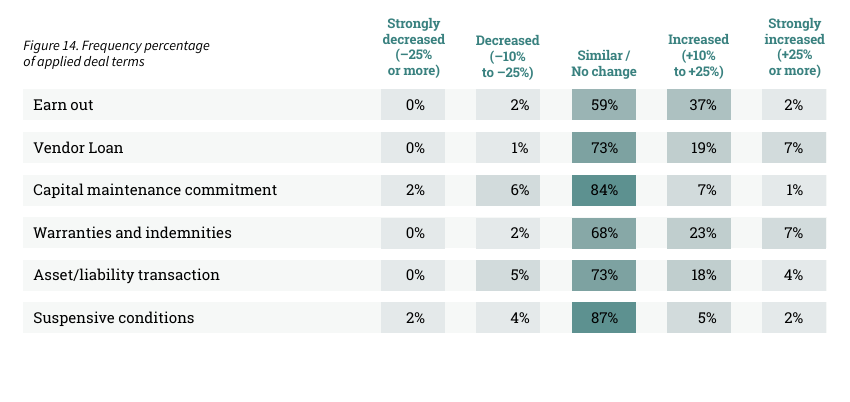
Macroeconomic developments can influence the use of specific deal terms. In this edition of the M&A Monitor, the application and frequency of various deal terms were analyzed (Figure 14).
In H1-2025, the use of most common deal terms remained largely stable compared with H2-2024. Warranties and indemnities were applied at a similar pace, with 68% of respondents reporting no change. Earn-outs and vendor loans showed notable increases, with 39% and 26% of respondents respectively reporting higher usage, reflecting a growing emphasis on risk sharing between buyer and seller. Other deal terms, including capital maintenance commitments and suspensive conditions, remained largely unchanged, while asset/liability transactions experienced a modest increase, reported by 22% of respondents.
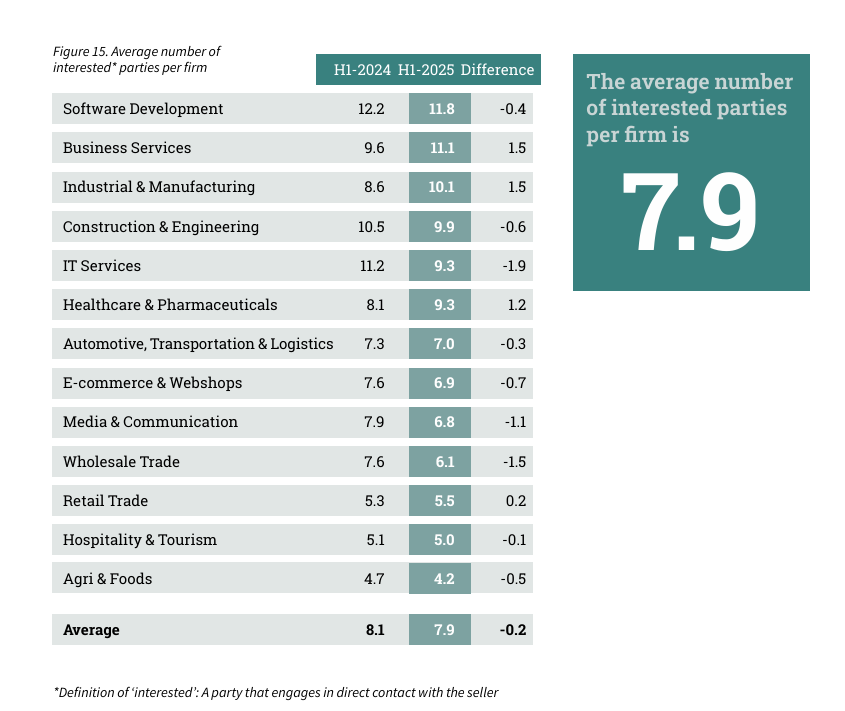
The M&A market is a ‘sellers market’. The balance between supply and demand in the M&A market varies by sector. M&A advisory firms were asked to indicate, for each sector, how many serious potential buyers typically show interest in a company that is put up for sale. The results are presented in Figure 15.
Various factors can influence the number of interested buyers. This is affected, among other things, by financing conditions, economic uncertainty, or sector developments that impact buyer appetite. While the average number of interested parties per company declined between 2022 and 2023, H1-2024 saw a renewed increase across most sectors. During that half-year, an average of 8.1 serious parties showed interest per company on offer. In H1-2025, that number has remained similar at 7.9 interested parties per offered firm on average.
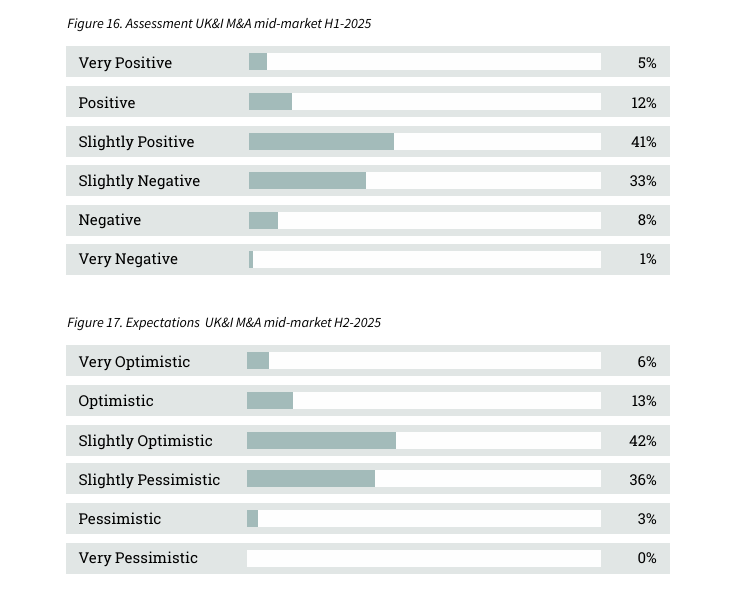
Assessing the performance of the UK&I M&A mid-market is based on many factors, including the willingness of entrepreneurs to sell their businesses, funding availability, macroeconomic developments, etc. An interpretation of these factors is needed to determine how the market will develop. The survey included both assessments of the M&A mid-market in H1-2025 (retrospective) and H2-2025 (projection).
Opinions on the performance in the first half of 2025 were mixed. While 58% of advisors were satisfied with the results, 42% held a rather negative view. Looking ahead, 61% of advisors have positive expectations for H2-2025.

The majority of M&A transactions take place in the mid-market. This M&A Monitor uses the definition of a mid-market company as having a revenue between £1 and £200 million. The survey that was the basis for this M&A Monitor was sent to 433 M&A advisory firms. Considering their combined input, they represent an essential part of the M&A mid-market in the UK&I. Out of the total of 433 advisory firms, we received 104 responses (24% response rate).
Sources used:
• 104 survey responses from senior managers of UK&I M&A advisory firms
• Bain & Company. (2023, March 28). How companies got so good at M&A.
• Dealsuite. (2025). M&A mid-market trends report 2025.
• Dealsuite M&A Monitors 2015 - 2025 • Dealsuite transaction data 2015-2025
• Field, A. (2011) Discovering Statistics SPSS. Third edition, SAGE publications, London. 1 -822
• Grabowski and Pratt (2013). Cost of Capital: Applications and Examples.
This research was conducted by Jelle Stuij, and Roos Bijvoet. For further questions, please contact Jelle Stuij. For further information about Dealsuite, please contact Tariq Mooseajee.


.png)


Grow your network. Find more deals.
Science Park 106
1098 XG Amsterdam
Netherlands
© 2026 Dealsuite. All rights reserved.


.png)
.png)