|

Jelle Stuij

Each year, Dealsuite analyses the deal terms used in share purchase agreements (SPAs) for small and mid-sized M&A transactions across Europe. This report offers insight into how often and in what way key elements, such as purchase price structures, conditions precedent, warranties, indemnities, securities, and non-compete clauses, are included in transaction agreements.
Deal terms represent the legal outcome of what has been agreed during negotiations between buyer and seller. They reflect the balance of power at the negotiating table and offer insight into the risk allocation and commercial priorities of both parties involved. As such, the structure and content of these terms can vary significantly depending on market conditions, transaction size, sector, and the specific dynamics of each deal.
This report examines the final versions of share purchase agreements used in small and mid-sized M&A transactions across Europe, specifically those closed between July 2025 and June 2026. All transactions included in the analysis were supported by professional legal advisors, ensuring that the deal terms reviewed are representative of real-world market practice.
The objective of this research is to provide a clear overview of the current usage and negotiation of key legal provisions. The findings aim to support M&A professionals and business owners by offering data-driven insights into how deals are structured across the European mid-market.
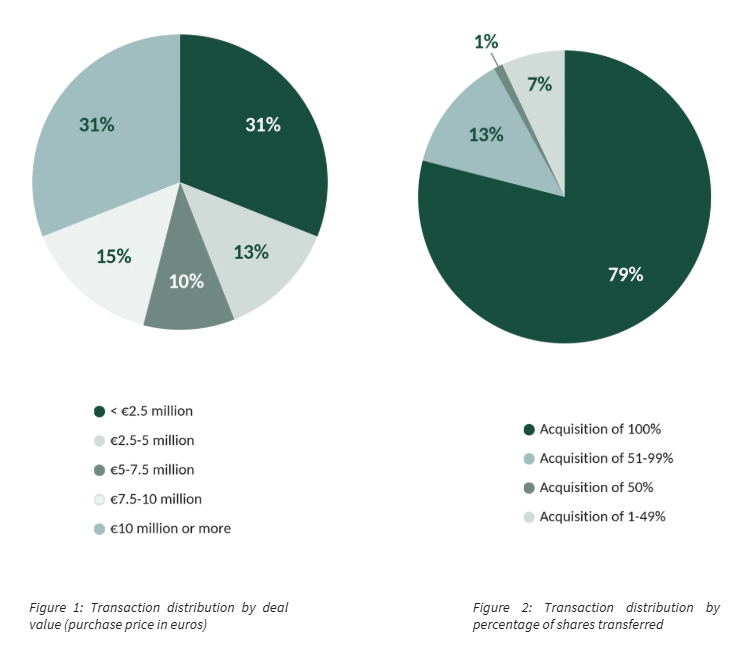
Figure 1 illustrates the distribution of reported transactions based on deal value (purchase price in euros). The survey was carried out among M&A legal offices that predominantly operate within the European mid-market.
Figure 2 presents the distribution of transactions by the percentage of shares acquired. In line with common market practice, the majority of transactions typically involve the acquisition of 100% of the shares.
Various financing mechanisms are used to structure purchase prices in mid-market M&A transactions. These often serve to balance risk and reward between buyer and seller, particularly in uncertain conditions. Common structures include deferred payments linked to future performance (earn-outs) and seller financing through vendor loans.
Earn-outs and vendor loans remain widely used to balance risk and reward between buyer and seller. Their use is broadly in line with last year: 38% of transactions include an earn-out (39% in 2025), 36% include a vendor loan (34% in 2025), and 26% combine both (28% in 2025).
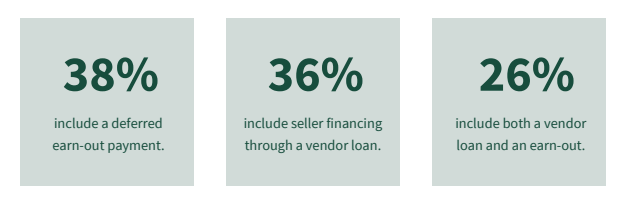
Figure 4 shows the size of earn-outs and vendor loans relative to the purchase price. Vendor loans have become larger: the share covering more than 20% of the purchase price rose from 24% to 31%. For earn-outs, this share is unchanged at 29%.

Purchase price structures define how value is transferred between buyer and seller and often reflect the balance of risk and confidence in a transaction. In mid-market European M&A, earn-outs remain a common mechanism to align post-closing interests and bridge valuation gaps.
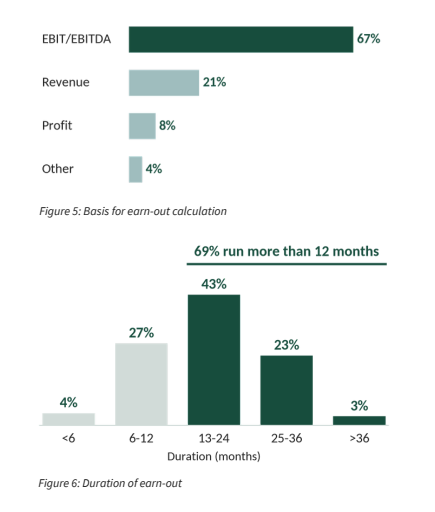
Figure 5 shows that EBIT/EBITDA remains the main performance indicator for determining the payout. Revenue-based earn-outs are less common, while only a small share is linked to profit or other performance metrics.
In seven out of ten transactions that include an earn-out, the deferred payment lasts between 6 and 24 months, with 13-24 months the most common term at 43%. Earn-outs are also running longer: 69% now last more than 12 months, up from 61% in the 2025 edition, while earn-outs shorter than six months fell from 16% to 4%.
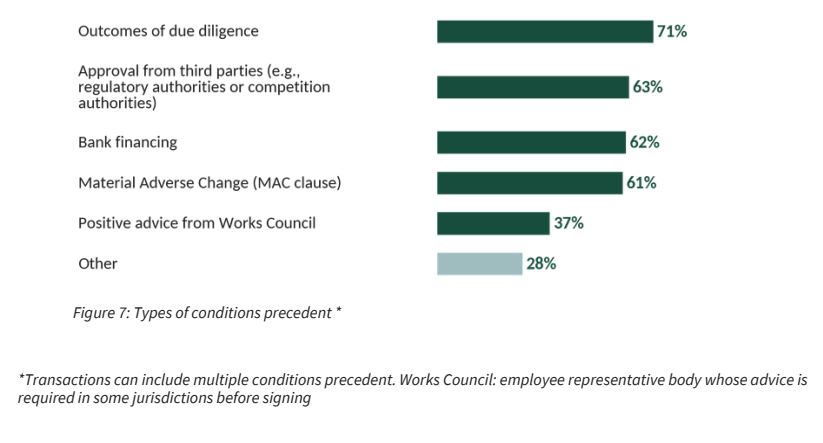
Due diligence outcomes are the most common condition, followed by third-party approval, bank financing andAC clauses at roughly equal levels
Conditions precedent outline the requirements that must be fulfilled before a transaction can be completed, serving as important safeguards for both parties. 81% of transactions now include one or more conditions precedent, up from 74% in the 2025 edition
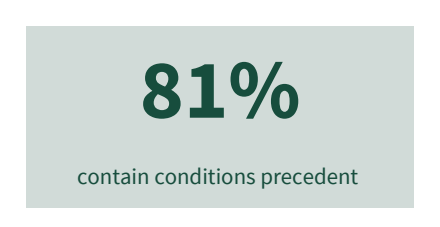
Figure 7 shows the types of conditions used in those transactions. Outcomes of due diligence remain the most common. Approval from third parties, such as regulatory or competition authorities, and Material Adverse Change (MAC) clauses follow at similar levels, each appearing in around six in ten transactions. The MAC clause, which allows a buyer to withdraw if the company’s position deteriorates significantly, rose from 53% in 2025 to 61%. Bank financing, by contrast, is less often a condition for closing (62%, down from 68%), suggesting sellers are increasingly filling the financing gap themselves, for example through larger vendor loans. Positive advice from the Works Council remains stable compared with last year. It is common for transactions to include multiple conditions precedent.
Warranties are a key element of most M&A transactions. Warranties give the buyer assurances about the accuracy and completeness of the information provided by the seller, and they allocate risk between both parties after the transaction. They typically cover areas such as financial statements, legal claims, asset ownership, and personnel matters, allowing the buyer to rely on the integrity of the company’s financial and operational position at the time of sale.
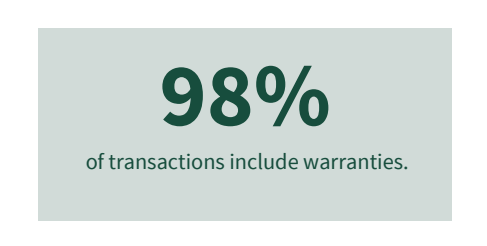
Figure 8 shows the areas covered. Three warranties are almost equally common: the balance sheet (96%), the absence of unknown legal claims (95%), and the correctness of information provided (95%). Personnel warranties saw the largest shift, falling from 95% to 88%.

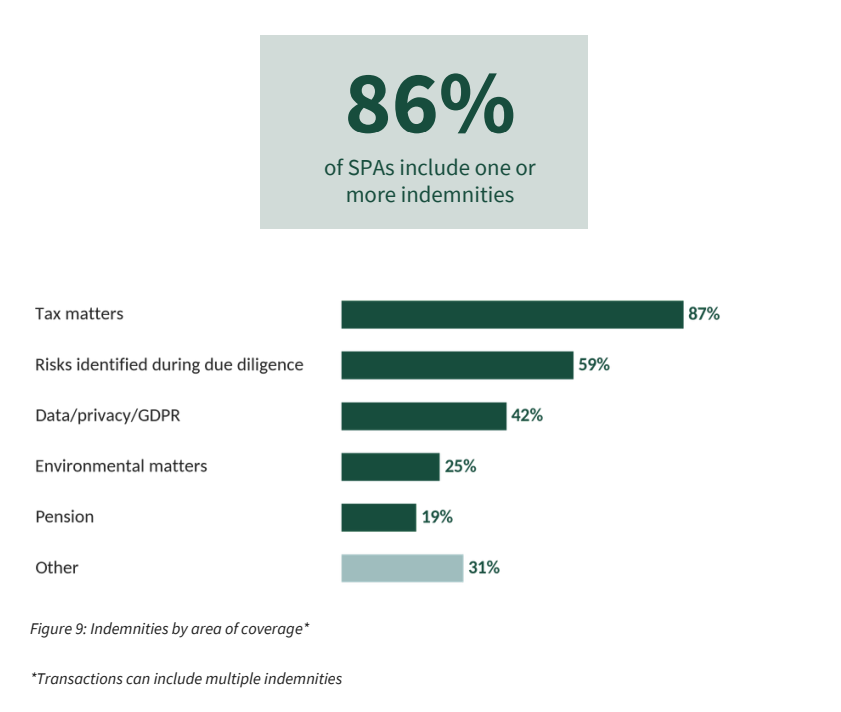
Indemnities are commonly included in M&A transactions to protect the buyer from liabilities arising from the company’s past activities. They allocate specific risks to the seller, ensuring that pre-existing issues do not transfer to the buyer after completion. Most transactions include at least one indemnity in the share purchase agreement, typically covering tax, legal, or compliance-related matters. 86% of share purchase agreements include one or more indemnities, up from 81% in the 2025 edition.
As shown in Figure 9, tax matters are by far the most common area covered by indemnities (87%), followed by risks identified during due diligence (59%). Data privacy and GDPR indemnities show the largest increase, rising from 30% in the 2025 edition to 42%, and now rank third. Pension indemnities account for 19%.
To ensure the seller has sufficient financial resources if a claim arises after the sale, securities can be used.
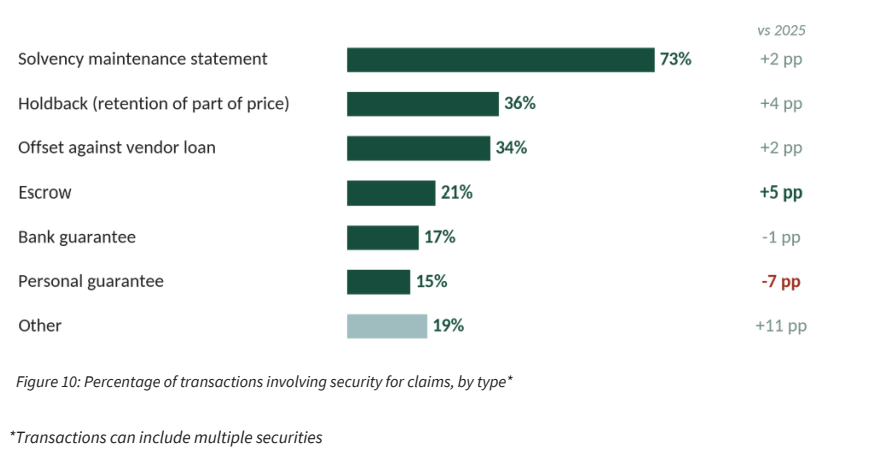
Figure 10 shows that solvency maintenance statements remain the most common form of security, used in 73% of transactions (2025: 71%). Holdbacks rose from 32% to 36%, and offsets against vendor loans rose from 32% to 34%. The clearest shifts are in escrow and personal guarantees: escrow arrangements rose from 16% to 21%, while personal guarantees fell from 22% to 15%. Bank guarantees remain stable at 17% (2025: 18%), and other forms of security account for 19%, up from 8%.
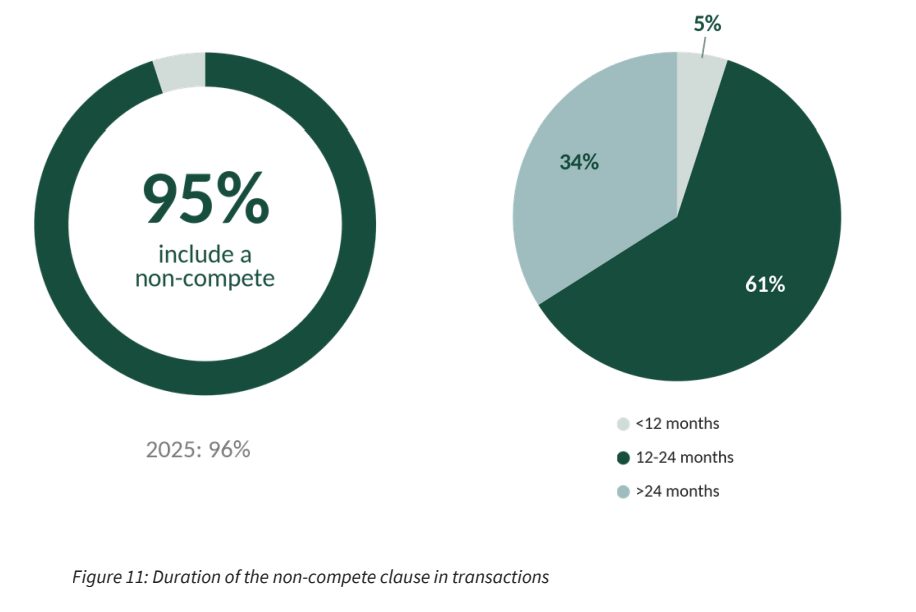
A non-compete clause restricts the seller from competing with the company being sold for a set period and within a defined area. It protects the buyer’s investment in goodwill, client relationships, and the acquired company’s market position. In the European mid-market, non-compete clauses remain an almost universal feature of share purchase agreements, included in 95% of transactions, often together with non-solicitation provisions, preventing the seller from approaching the company’s customers or employees.
Figure 11 shows that most clauses run for 12 to 24 months (61%), in line with last year (64%). Clauses lasting more than 24 months rose slightly from 30% to 34%, while durations of less than 12 months remain uncommon at 5% (2025: 6%).
The majority of M&A transactions take place in the mid-market segment. This Deal Terms Report focuses on the legal and structural aspects of such transactions, providing insight into how deal conditions are shaped across Europe.
For this research, Dealsuite conducted a survey among M&A legal firms specialised in mid-market transactions in Europe. A total of 942 firms provided detailed input based on the share purchase agreements they advised on between July 2025 and June 2026.
The conclusions are further supported by Dealsuite’s proprietary data and ongoing market intelligence. Together, these inputs offer a unique perspective on current deal structures, reflecting real-world market practices across multiple European jurisdictions.
Focus: Mid-market M&A transactions across Europe
Regions covered: Europe-wide, across all major markets
Respondents: M&A legal firms advising on share purchase agreements
Approach: Quantitative survey on deal structures and legal terms
Data sources: Survey input combined with proprietary Dealsuite data and insights
Scope: Purchase price structure, conditions precedent, warranties, indemnities, securities, and non-compete clauses
This study is further supported by separate regional Dealsuite reports, analysing the mid-market M&A landscape in CEE, DACH, UK&I, France, Southern Europe, the Nordics and the Netherlands.
Additional sources used:



Grow your network. Find more deals.
Science Park 106
1098 XG Amsterdam
Netherlands
© 2026 Dealsuite. All rights reserved.